Operate
Give owners, operators and workers the right interface for daily work.
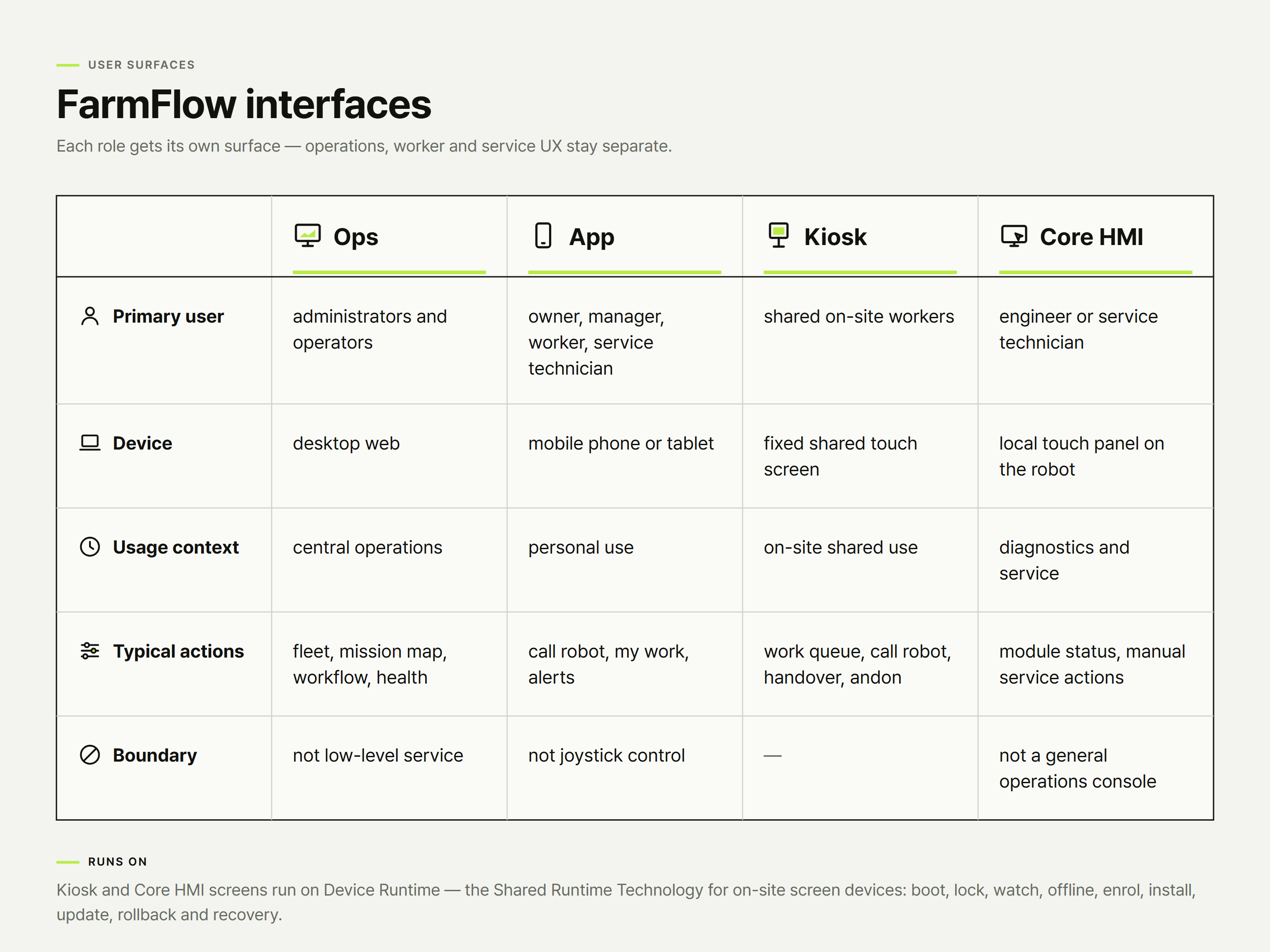
- FarmFlow Ops
- FarmFlow App
- FarmFlow Kiosk
FarmFlow connects robot integration, autonomy, site runtime, operations, observability, data and engineering into one consistent system.
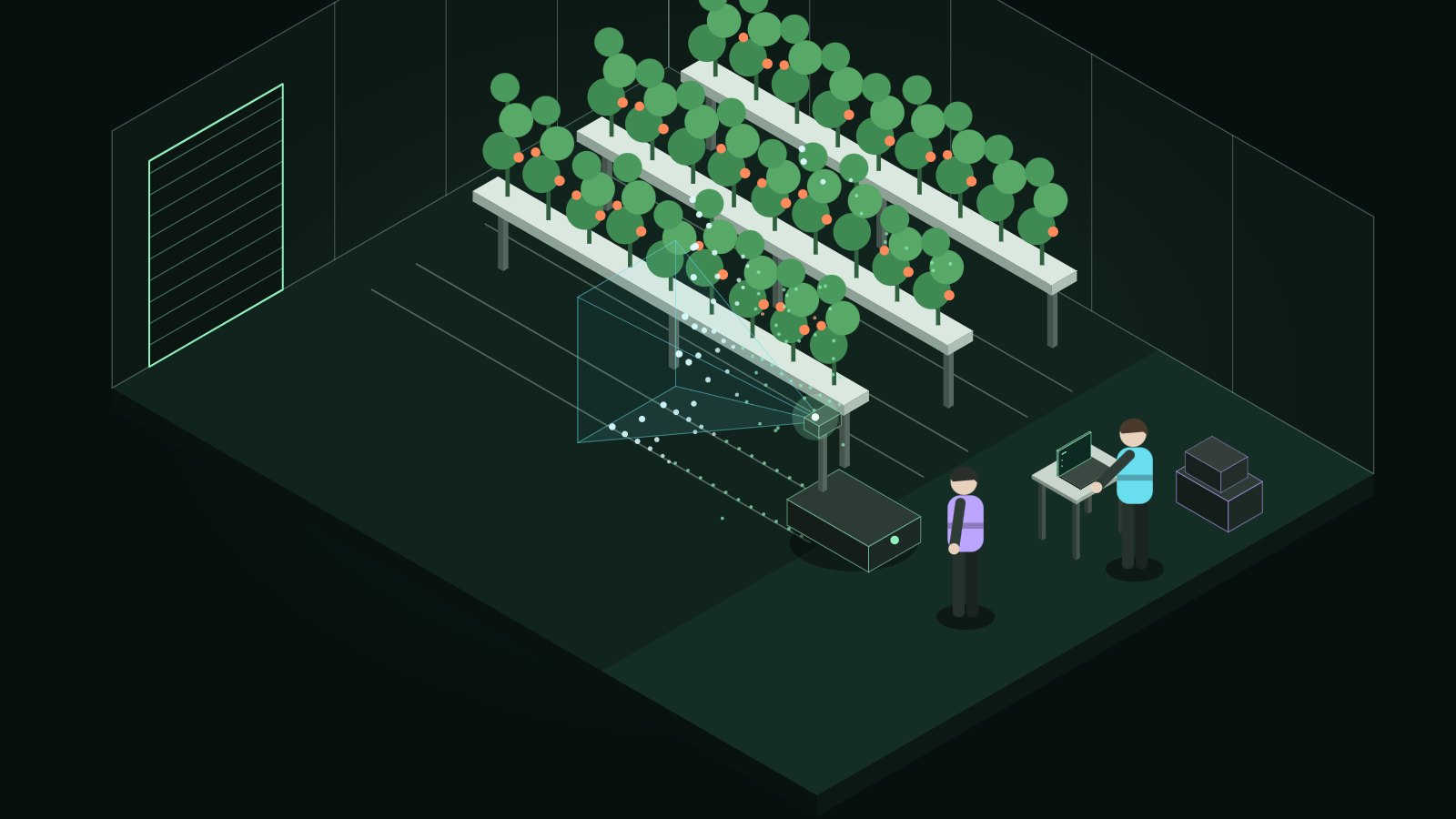
From mapping the greenhouse to running several robots and reading the same flow on a field kiosk — follow one worker-following transport robot through its day.
Driving and figures in the film are simulated data; some scenes are concept animation. Watch on YouTube
The work shown in this film is being carried out with support from Korea's Smart Farm Multi-Ministry Package Innovation Technology Development Program (MAFRA · MSIT · RDA).
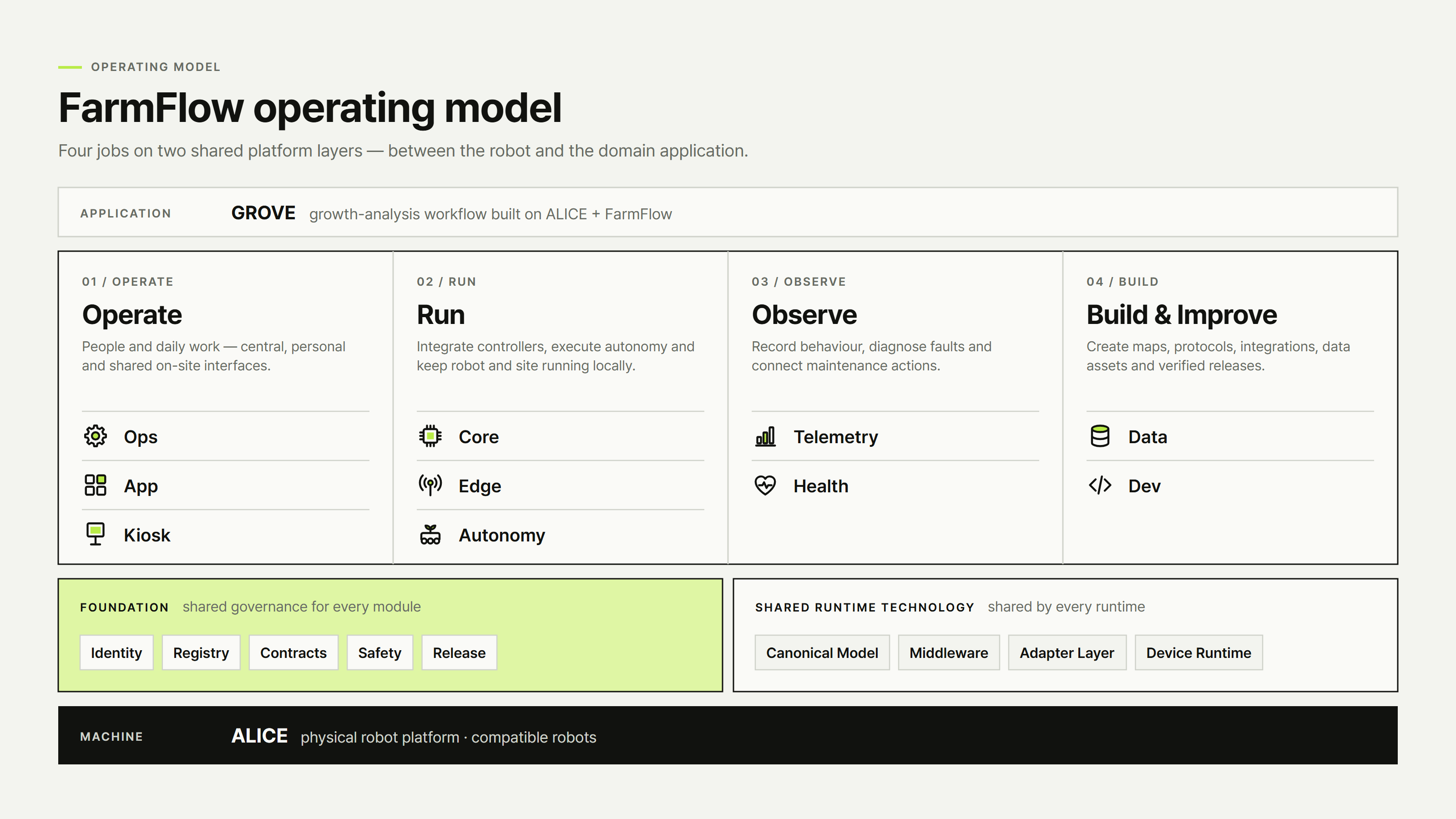
FarmFlow is organized around what a robot system must do every day: operate, run, observe and build. Product modules remain composable, but share the same identity, contracts and release model.
Give owners, operators and workers the right interface for daily work.
Integrate controllers, execute autonomy and keep the site running locally.
Record system behavior, diagnose failures and connect maintenance actions.
Create maps, protocols, integrations, data assets and verified releases.
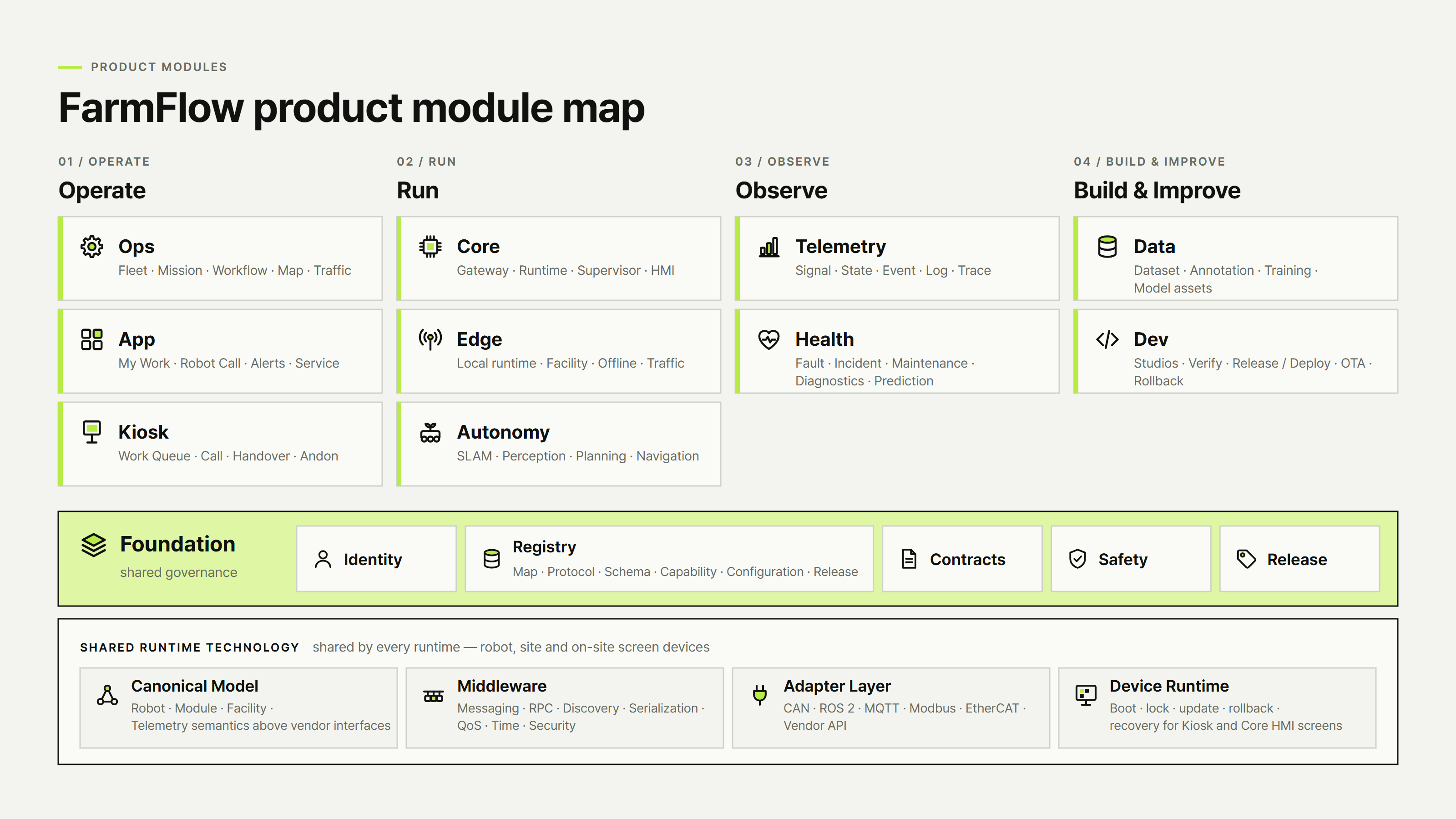
FarmFlow modules have clear ownership boundaries. They can be deployed selectively, while Foundation keeps IDs, schemas, states and releases consistent across the system.
FF-OPSFleet · Mission · Workflow · Map · Traffic
FF-APPMy Work · Robot Call · Alerts · Service
FF-KIOSKWork Queue · Call · Handover · Andon
FF-COREGateway · Runtime · Supervisor · HMI
FF-EDGELocal runtime · Facility · Offline · Traffic
FF-AUTOSLAM · Perception · Planning · Navigation
FF-TELSignal · State · Event · Log · Trace
FF-HLTHFault · Incident · Maintenance · Diagnostics · Prediction
FF-DATADataset · Annotation · Training · Model assets
FF-DEVStudio · Verify · Release · OTA · Rollback
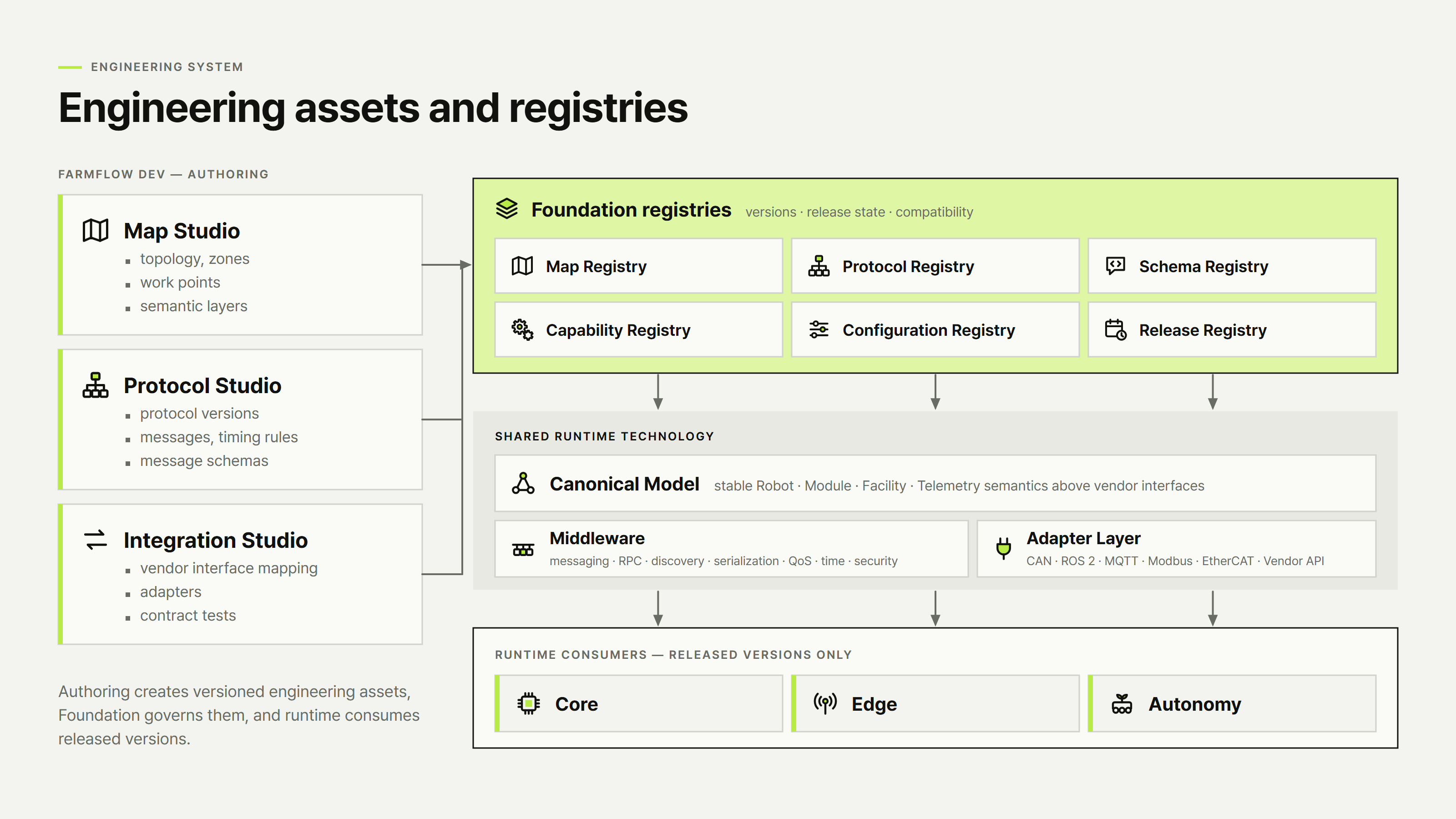
Maps, device protocols and vendor integrations are versioned engineering assets—not one-off configuration files. FarmFlow Dev creates them; Foundation governs them; Runtime consumes released versions.
Edit topology, zones, work points, semantic layers and release-ready maps.
Define protocol versions, messages, timing rules and Message Schemas.
Map vendor interfaces to FarmFlow canonical models and validate adapters.
Map · Protocol · Schema · Capability · Configuration · Release
Stable robot, module, facility and telemetry semantics above vendor-specific interfaces.
Messaging · RPC · Discovery · Serialization · QoS · Time · Security
CAN · ROS 2 · MQTT · Modbus · EtherCAT · Vendor API
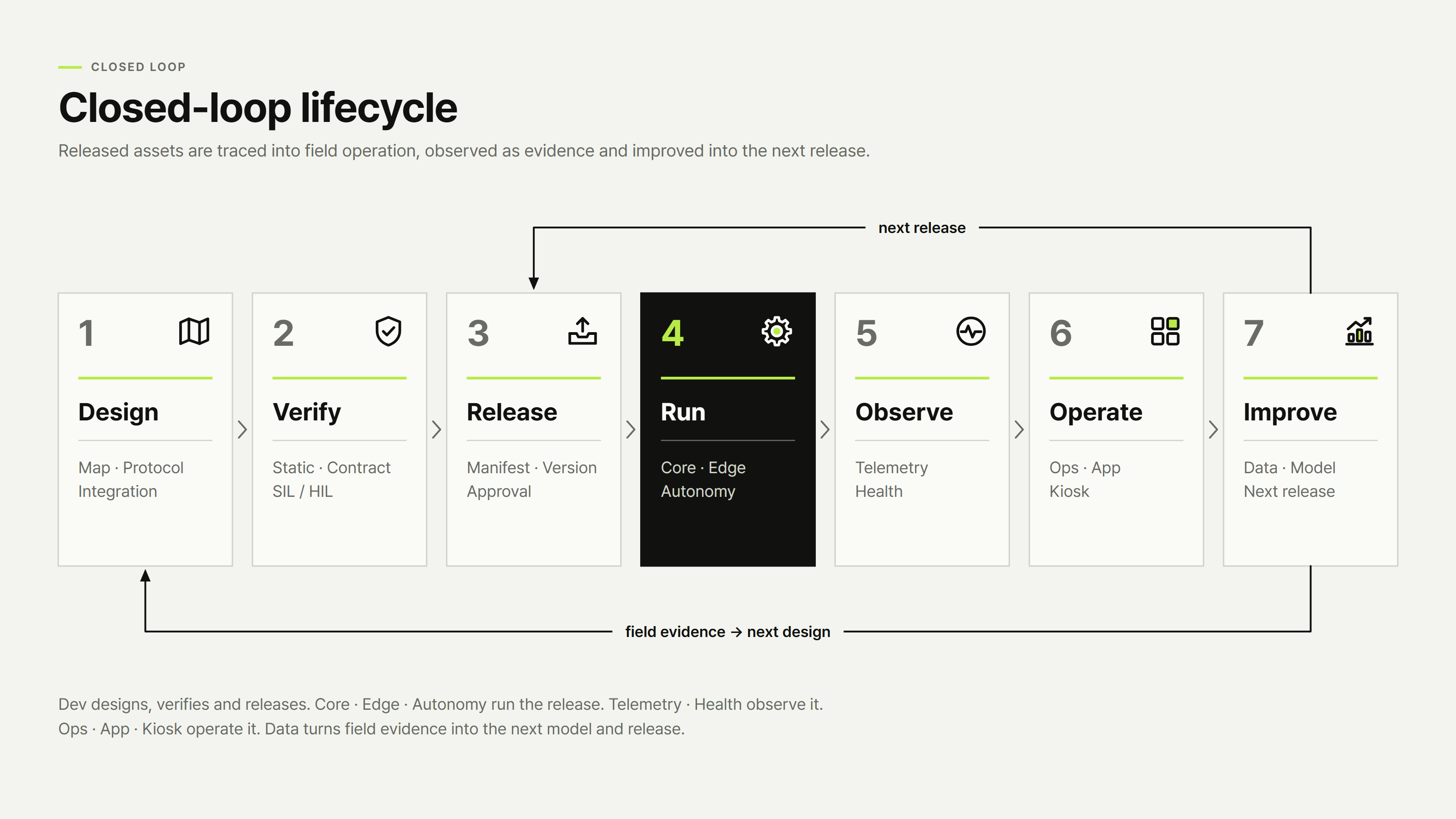
A released map, protocol, model and software configuration can be traced into field operation, observed as evidence, and improved into the next release.
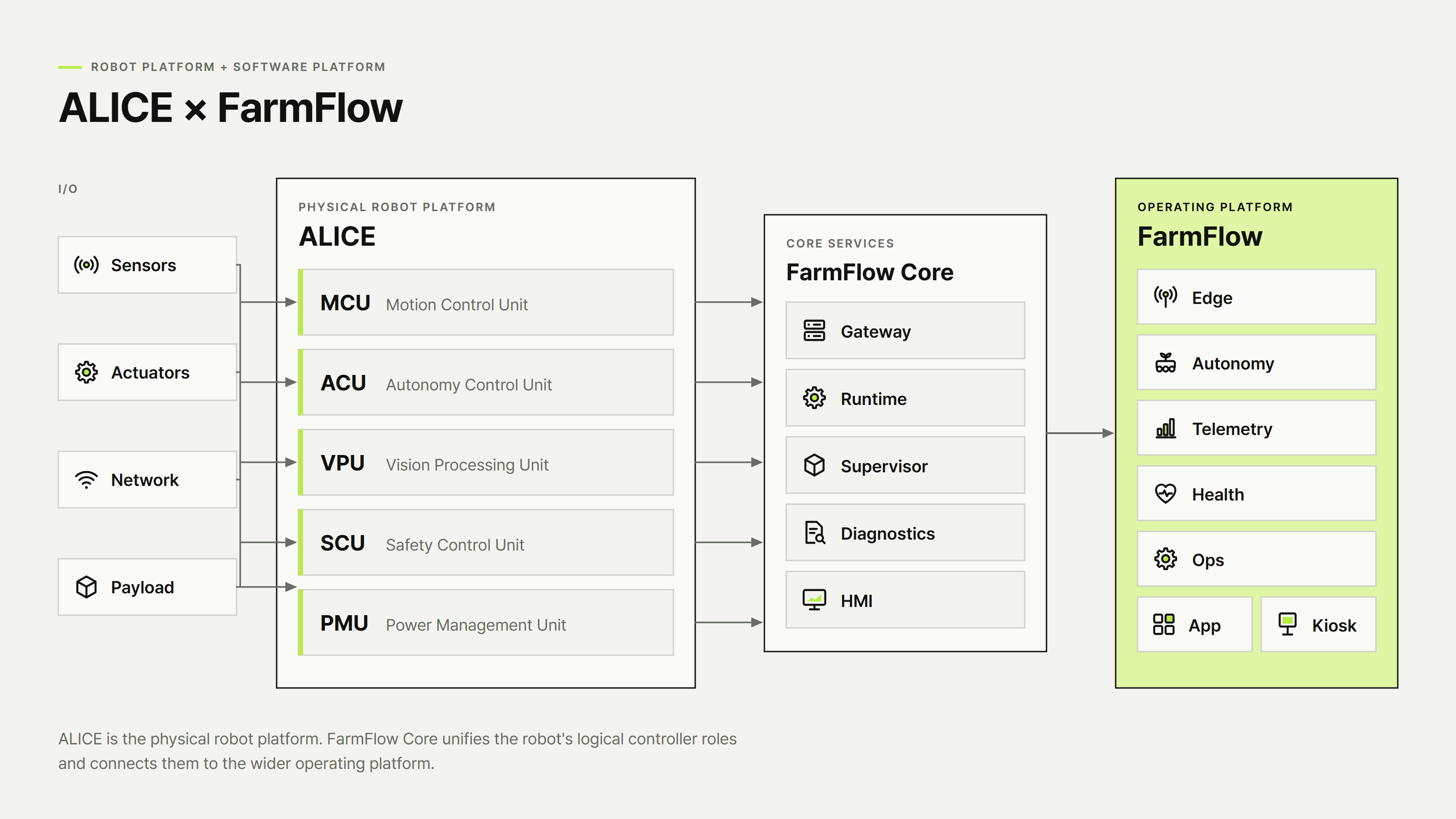
ALICE is the physical robot platform. FarmFlow Core binds its controllers, sensors, actuators and payloads into a common software model.
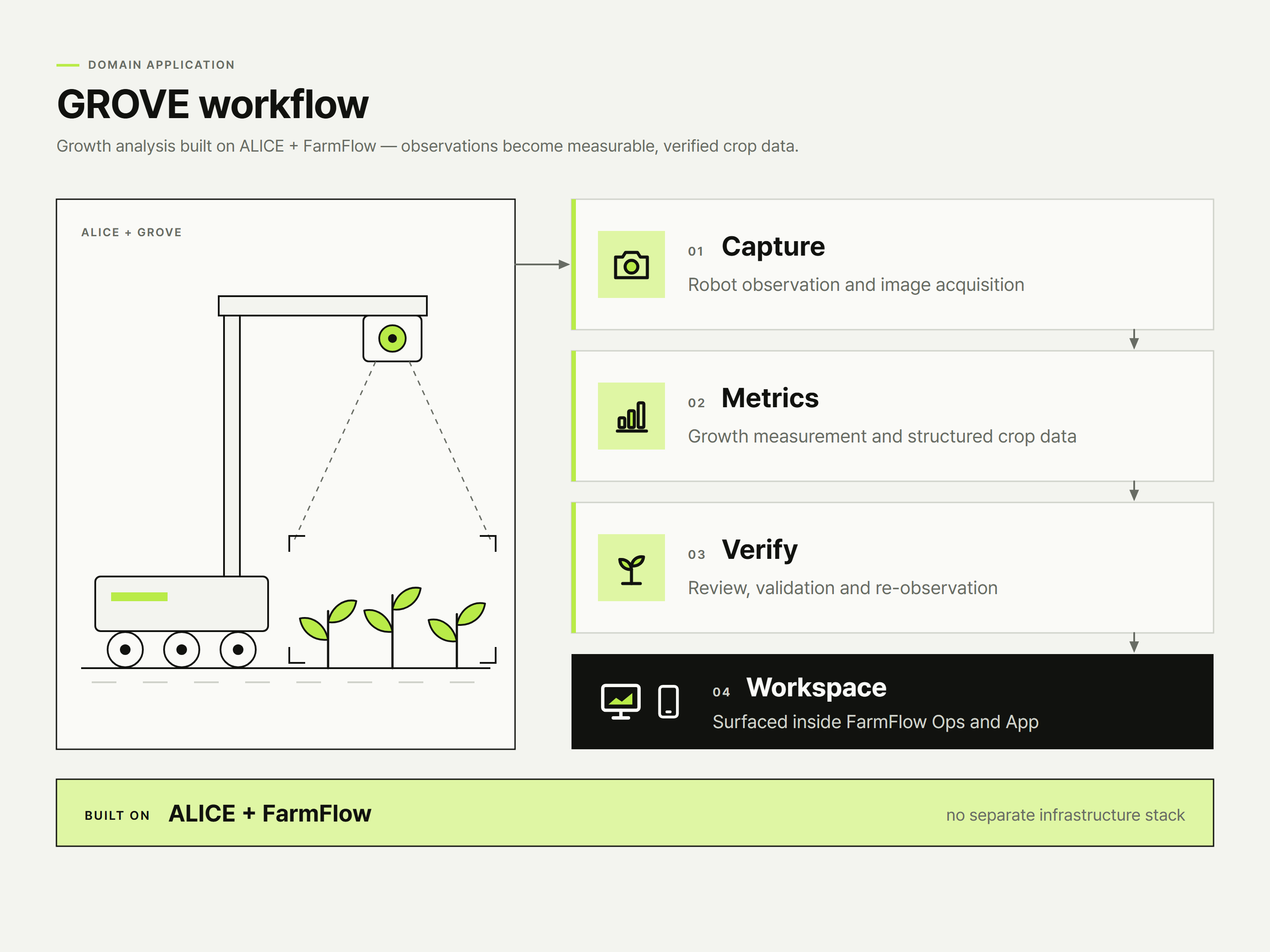
Growth analysis built on ALICE + FarmFlow.
Robot observations become measurable crop data, verification workflows and repeatable evidence without creating a separate infrastructure stack.
Critical control stays close to robots and sites. Central services add visibility, governance and lifecycle management without making field operation cloud-dependent.
Critical execution stays on robot and site.
Mission cache, local runtime and store & forward.
Deploy only the modules required for the operation.
Registry, contract and release manifest across every configuration.
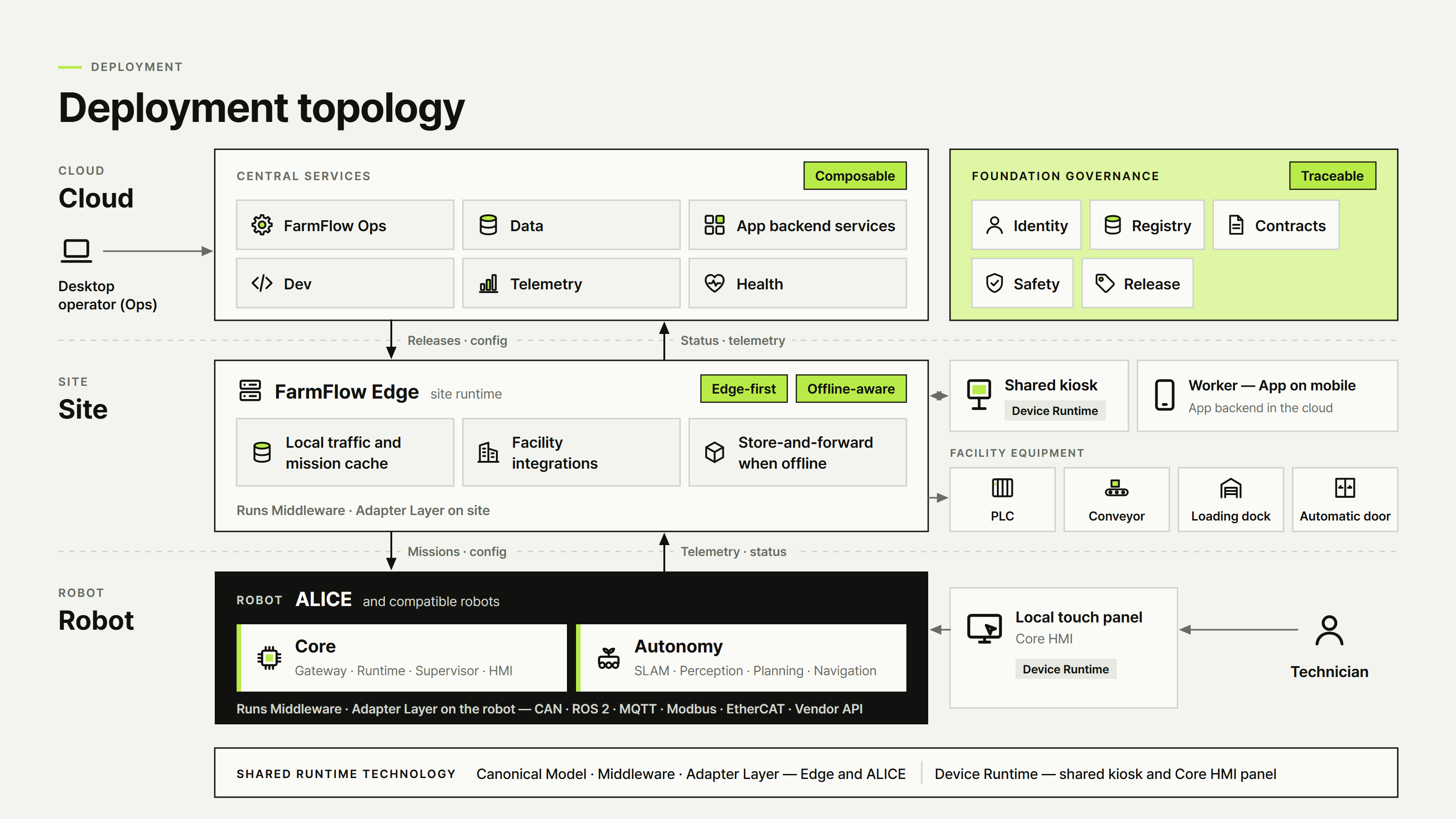
We can map controllers, protocols, facilities, runtime and operations into a deployable FarmFlow architecture.